Floral Information Guide

Flowers in Balboa Park

Dines Poulsen bred the first rose that would be later classified as a floribunda; his rose Rodhatte was introduced in 1912 and was a result of a cross between a hybrid tea and a polyantha rose. This was the beginning for this new type of rose.The name floribunda means 'flowering in abundance' and true to their name - instead of having a single rose blossom at the end of a long stem, they have groups or "sprays" of blossoms. Some bear as few as three roses in a cluster, some five, seven or more. They are primarily landscape roses that bloom freely, almost continuously spring through fall. Their low height makes them ideal for borders, for lining walks and drives. They also mix well in beds with hybrid teas, providing a lower front row of color against the taller plants. Floribundas are versatile; an individual shrub will fit easily into almost any sunny border planting. However, they are perhaps most striking in mass plantings.

Here in Balboa park, Floribunda Roses are around every corner, even in the winter months in San Diego. As you walk under the beautiful arches that lead into Balboa Park on El Prado you will see a long path way lined with trees and bushes. These trees and bushes contain some of the most gorgeous roses you will ever see. The striped beauty and many varities will immediately attract your attention.


Black-eyed Susans (Rudbeckia Hirta) are flowering plants that grow over three feet tall. They have green leaves up to six inches long. Black-eyed Susans add a pool of sunshine to any garden. Black-eyed Susans usually grow in open woods, gardens, fields, and roadsides. They grow quickly in just about any kind of soil. From midsummer, these tough native plants bloom their golden heads off in sun or light shade and mix well with other perennials, annuals, and shrubs. These plants are most easily recognized by their flowers. They have yellow flowers with a brownish-purple center. The flowers are two to three inches across and grow on a stalk up to eight inches long.

Here in Balboa park, Black-eyed Susans flourish, even in the winter months in San Diego. As you walk under the beautiful arches that lead into Balboa Park on El Prado you will witness the beauty of The Old Globe and the San Diego Museum of Man. Once inside, the beauty of these flowers lay in the Alcazar Garden making a visit to this beautiful, relaxing, intriguing and breathtaking area of Balboa Park.

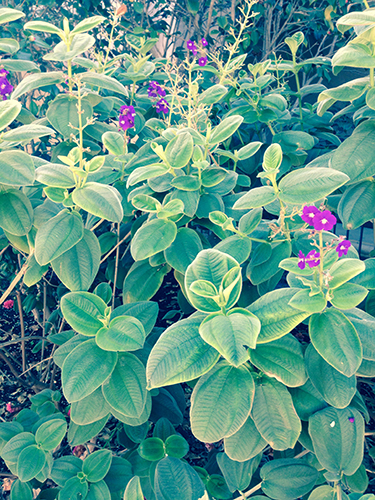
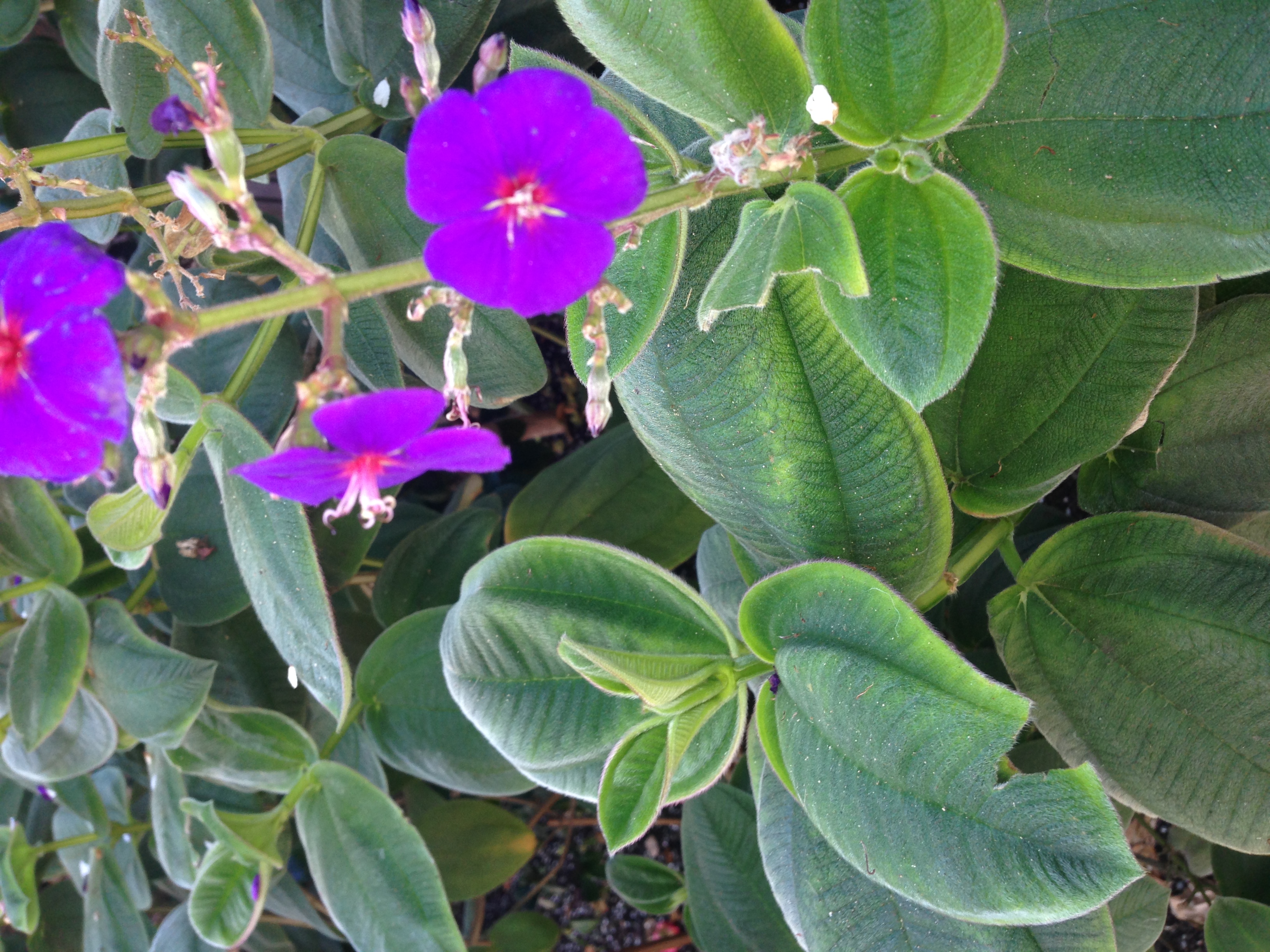
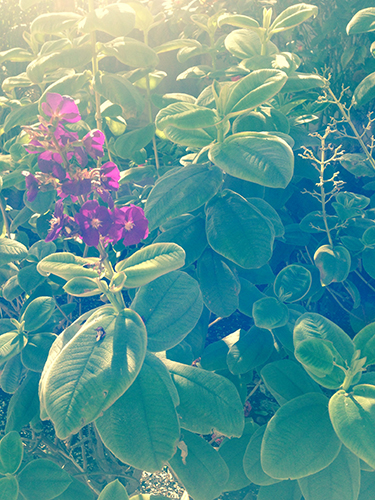
There are over 300 species of Tibouchina. Tibouchina multiflora has huge leaves(up to 10" in diameter), velvet and "hairy" - nice to touch -they tend to turn orange/red at the lower part of the trunk. Tibouchinas are tropical and subtropical plants.

Here in Balboa park, Tibouchina Multiflora bring a vibrant purple to the landscape. Upon entering Balboa Park you do not immediately see these amazing plants, they are spread along the side wall directy opposite the Prado. These plants capture the eye with their large leaves and bright flowers.

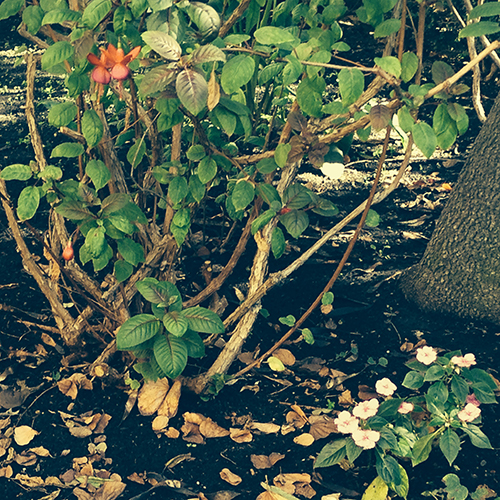
There are currently almost 110 recognized species of Fuchsia. The vast majority are native to South America, but with a few occurring north through Central America to Mexico, and also several from New Zealand to Tahiti. One species, F. magellanica, extends as far as the southern tip of South America, occurring on Tierra del Fuego in the cool temperate zone, but the majority are tropical or subtropical. Most fuchsias are shrubs from 0.2–4 m (8 in–13 ft 1 in) tall, but one New Zealand species, the kōtukutuku (F. excorticata), is unusual in the genus in being a tree, growing up to 12–15 metres (39–49 ft) tall.

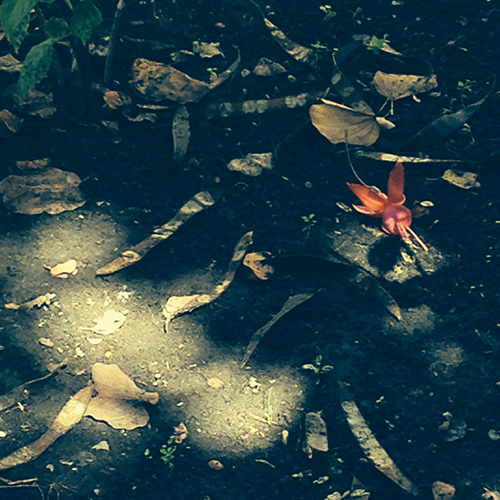
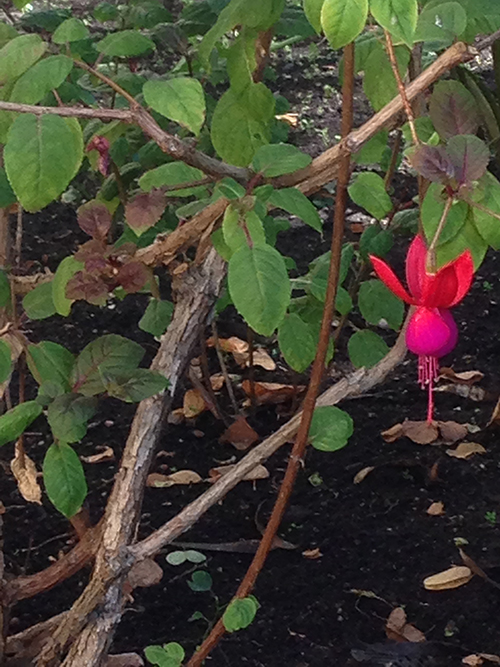
At Balboa park, the Fuscha species of flower seems to be tucked away and with a little effort you can find it. This pink pop of color can be found in the Alcazar Garden. The Fuscha plant was mainly leaves and branches but with a little looking you will be able to see the famous purple pink color of this species.

Anemone is a genus of approximately 120 species of perennials found mostly in temperate regions of the Northern Hemisphere. They can be divided into three groups: those from woodland and alpine pastures which flower in spring those from the Mediterranean or Central Asia where the summers are hot, which flower in spring or early summer; the larger herbaceous species which flower from late summer to autumn. The name anemone is often said to come from the Greek word anemos meaning 'wind'. However, it is more likely to be a corrupted Greek word, of Semitic origin, referring to the lament for slain Adonis or Naaman, whose blood produced the red A. coronaria

Here in Balboa park, Anemone Blanda can be found everywhere. Purple, White and pink flowers are scattered around the Park to create the visually pleasing landscape. These flowers are more simple than most, but that does not mett less pretty.

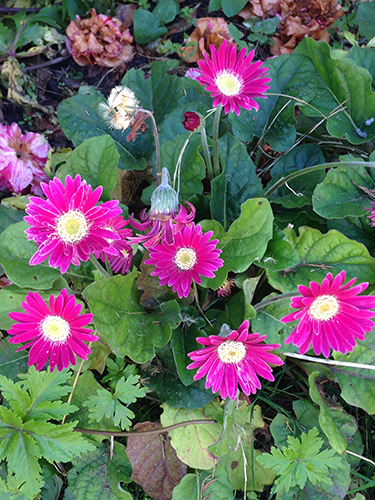
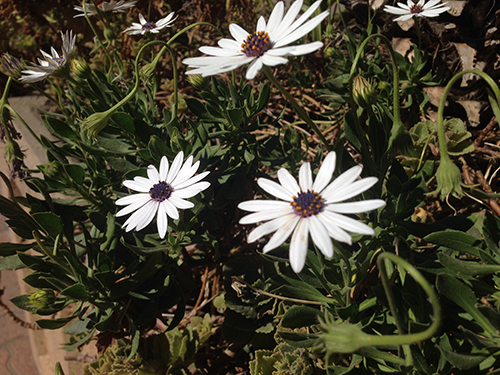
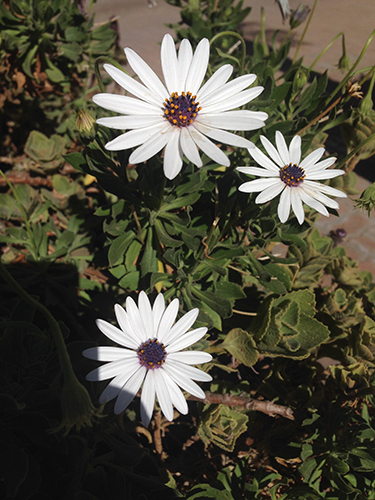
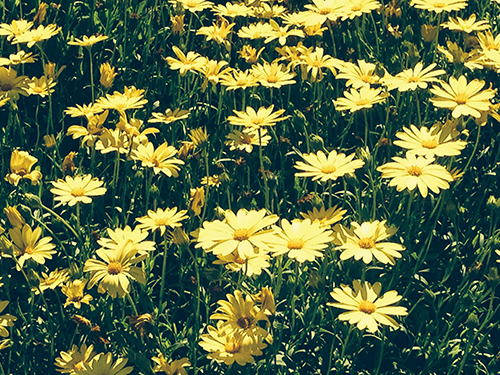
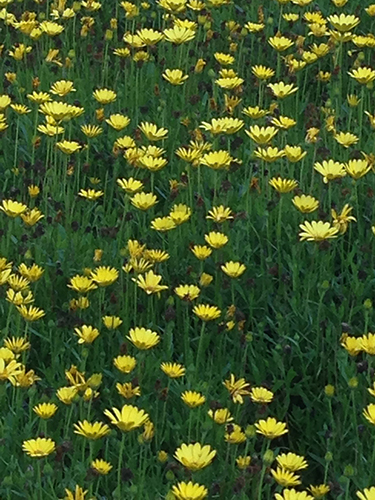
Daisies belong to one of the largest families of plants in the world, that of "vascular plants", i.e. those which circulate goodness around their systems, making up almost 10% of all flowering plants on Earth and are found everywhere on Earth except Antarctica. The name "daisy" is thought to come from the Old English "daes eage", meaning "day's eye", for the way in which it opens at dawn. The daisy family, known to scientists as Compositae, was classified in 1792 and have since acquired the reutation of purity and innocence.

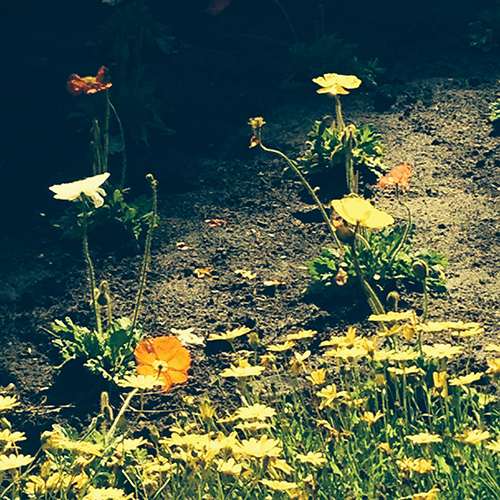
Here in Balboa park, Gold Eye Daisies are impossible to miss. As you enter the Alcazar Garden the main squares in the center are filled with a see of yellow. Daisies bring their simple beauty and make this Garden an interesting and colorful location.